Reflections on the powerfully therapeutic "Five M's" of Argentine Tango: Musicality, Movement, eMotion, eMbrace, and Mindfulness
Tuesday, August 23, 2016
The Science of the Embrace
Social tango is a dance of touch. Social tango dancers need no visual cues. A recent research article on touch has made me rethink tango. There are a few things that I now realize. First, I realize (the obvious) that the tango embrace communicates emotion far more than most of us realize. And secondly, I am intrigued with how the researchers called the person touched the "decoder" and the one who touches, "the encoder."
Many dances seem clearly dance-dyads of "encoders" and "decoders" (leaders and followers), but if social tango is truly a dance of touch, lacking visual clues, then perhaps tango is NOT a dance of encoders and decoders. In tango we touch and are touched. Much research has been dedicated to voices and facial expressions to convey emotion. The "voice" of emotion is the music in music-centric improvisational dances like tango and west coast swing. There is no speaker/listener, leader/follower or encoder/decoder in touch. Touch is egalitarian. So perhaps I overstate that tango is a dance of touch, but if I am right, then we should pay more attention to how we truly communicate (both encode and decode) through touch.
I have the summary of the research below. The scientists found that strangers merely touching a person on the arm can accurately convey complex emotions--even with no visual clues.*
Tuesday, August 9, 2016
Endogenous or Exogenous Tango?
| Chicho Frumboli and Roxana Suarez |
Tuesday, July 26, 2016
The 4 Ways of Saying "I love tango"
This is part II on the four distinct ways of saying "I love you" in Ancient Greek.If the poet Elizabeth Barrett Browning had danced tango, this perhaps would be the way she would have started off her famous poem:
Tango partners ...
"How do I love thee? Let me count the ways.
I love thee to the depth and breadth and height
My soul can reach, when feeling out of sight
For the ends of Being and ideal Grace....."*
The poem, given in full below, tells of a love that is deeply diverse. Had Elizabeth Barrett Browning written her poem in Ancient Greek, surely she would have used four different words for "to love."
I love thee to the depth and breadth and height
My soul can reach, when feeling out of sight
For the ends of Being and ideal Grace....."*
The poem, given in full below, tells of a love that is deeply diverse. Had Elizabeth Barrett Browning written her poem in Ancient Greek, surely she would have used four different words for "to love."
Tuesday, July 19, 2016
Tango and Platonic Eros
How about ágápē, philía, and storgē-love?
The Ancient Greeks, who had more distinct ways of speaking about "love," would find it incomprehensible if they had to learn English, French or Spanish. They surely would be perplexed how we use "to love" or "aimer" or "querer" as verbs for many different things: "to like," "to bond to," "to lust for," "to want," or "to love." I think the inhabitants of ancient Greece would demand more exactitude for language. "I love you," "je t'aime" and "te quiero" all need a big dose of context. In what context do you love tango? Let's use the language of some of the greatest philosophers of all time to talk about our Philosophy of Dance (PhD)! In Ancient Greek we can experience four distinct ways for loving our tango and the people with whom we dance by using the words: éros, ágápē, philía, and storgē. What is your strongest expression for the love of and your love in tango?
Wednesday, July 13, 2016
Grace Overcomes, Grace Survives.
Do you want to maintain your love of dance? Then, I recommend that you dance for survival. Dance to create the inner happy hormones, such as endorphins, for a lifetime of enjoyment. From an evolutionary perspective, grace's link to survival has been overlooked by the scientific community. Unfortunately, the psychological research community also remains mostly in the dark to the importance of grace. Yet, grace is necessary in every animal movement if the animal is to survive. Also, authentic grace--as all survival behaviors--belongs no more to females than males. Primordial grace starts from its epicenter in the survival of all species, and although sometimes grace is beautifully represented in the arts, all too often the outward performance of grace creates an adrenaline "rush" and cortisol stress hormones, mixed with mood elevating and calming hormones. I often hear people complain of a dancer who "looks good" but only causes their partners stress with a barrage of cool moves, or the outwardly "graceful" person feels strangely awkward. I maintain that authentic grace creates mostly endorphins, the "happy hormones" which elevate our mood. Endorphins tell you that you are truly being graceful.
Saturday, July 2, 2016
An interview on Tango Therapy
Dance Papi, a blog about dance, published this article on tango therapy on April 5, 2016.
By Maria Ore (used with permission)
Tango Therapy:
An Interview with Therapist, Mark Word
A few months ago, we posted an article about salsa, dance therapy, and PTSD. The post led us to connect with one of the readers who commented on the article, Mark Word. Mark is a therapist who worked for many years as a social work officer in the Army. Today, he continues his practice as a civilian working for the military, taking a special interest in those who suffer from PTSD.
By Maria Ore (used with permission)
Tango Therapy:
An Interview with Therapist, Mark Word
Tuesday, June 21, 2016
Fear of Judgmental Eyes
Even with the attainment of tango perfection, this particular anxiety may not go away. Take a moment to recall if you know a talented musician or dancer who is debilitated by the fear of being watched and judged. I know many talented people like this. So the ability or the attainment of tango skills is not the issue with this social anxiety. Skill is indeed needed, but it is to put the feeling of being judged to rest! And it does take skill. Fair and kind self-talk script writing is a great skill. Below, I am going to suggest a few things that will help you or a friend to develop this skill. You can write the new scripts all by yourself, and if that does not work, a life coach or CBT therapist* can help you.
Here's a video that gives the feeling of judgmental eyes very well:
Sunday, June 12, 2016
The "Choir Effect" in Tango
![]() |
| Does it feel like you are part of a choir when you dance? |
Wednesday, June 1, 2016
What makes tango therapeutic?

What makes tango therapeutic? If you know the answer to this question, then you will dance throughout your life.
All therapeutic interventions (psychological / physical / spiritual) need certain conditions to have a positive, healing effect. Tango's therapeutic effect is tied to a special mix of psychologically cleansing elements: Movement, Music and the eMbrace. These are the Three M's of tango. Then there is a "meta-element" which binds them together. This binding element is improvised tandem movement as a somatic response to the music.
Friday, May 6, 2016
Dance: The Children of Music
Imagine--if you will--a time when Archetypes roamed the earth. I see two parents taking their newly adopted small children to the park. The children are now playing as the adoring parents look on. In their joy, the parents begin harmonizing together a song to the children.
The children do not know that they have been adopted by Music, incarnated as a man and woman. Most Archetypes are just one person, but Music is a man and a woman. The children never have heard Music, their parents, before. They have never danced before, but upon hearing Music, they spontaneously become the incarnation of Dance. The children were not asked or instructed how to dance; they simply dance. The children dance in awe of Music as if they were compelled even against their will to move.
Soon the children learn to sing like their parents. One day they sing and clap their hands for their parents. The children's song reminds Music, the parents, that they once were children, incarnations of Dance. As the children sing, their parents, although adults, return to their childlike-form and spontaneously dance. Yet Music dances differently than the children do: They dance united in a synchronized, spontaneous embrace. The children watch in awe.
This is the circle of life. Music becomes Dance. Dance becomes Music. I was once a musician. I became a dancer, which only reminded me of my childlike state. When the music begins, it fills my body and takes over my soul to do things that I have never done before, nor what I ever have been taught to do. The circle of life is a musical dance of embrace. In a word: Tango.
Comments? "Like" Tango Therapist's Facebook page.
Photo Credit: Dance watches Music dance the dance of embrace.
http://un-amore-per-sempre.tumblr.com/post/46691609124/sinuses-children-watching-mom-and-daddy
The children do not know that they have been adopted by Music, incarnated as a man and woman. Most Archetypes are just one person, but Music is a man and a woman. The children never have heard Music, their parents, before. They have never danced before, but upon hearing Music, they spontaneously become the incarnation of Dance. The children were not asked or instructed how to dance; they simply dance. The children dance in awe of Music as if they were compelled even against their will to move.
Soon the children learn to sing like their parents. One day they sing and clap their hands for their parents. The children's song reminds Music, the parents, that they once were children, incarnations of Dance. As the children sing, their parents, although adults, return to their childlike-form and spontaneously dance. Yet Music dances differently than the children do: They dance united in a synchronized, spontaneous embrace. The children watch in awe.
This is the circle of life. Music becomes Dance. Dance becomes Music. I was once a musician. I became a dancer, which only reminded me of my childlike state. When the music begins, it fills my body and takes over my soul to do things that I have never done before, nor what I ever have been taught to do. The circle of life is a musical dance of embrace. In a word: Tango.
Comments? "Like" Tango Therapist's Facebook page.
Photo Credit: Dance watches Music dance the dance of embrace.
http://un-amore-per-sempre.tumblr.com/post/46691609124/sinuses-children-watching-mom-and-daddy
Sunday, May 1, 2016
Your tango signature is all over your body
Why forge your tango teacher's signature? Movement signatures are being scientifically measured for each person's unique "Individual Motoric Signature," as reported in The Journal of the Royal Society.* Should we copy other dancers' unique movement signatures? It seems that many try to do exactly that. Let's say that we could: What would be gained? People sometimes say, "I wish I could dance just like him." Really?
Sunday, April 24, 2016
What makes tango anti-social
![]() |
| Rejection, unlike fear, sadness and anger look like physical pain in brain scans |
Translations: Romanian / German [pending]
Although tango is called a social dance, too often certain community milongas are poor examples of social behavior. The solution requires an easy change in behavior for those dancers new to tango or those who have been dancing for years. When I hear people complaining about the asocial or even arguably anti-social milongas, they mention the character of people. Character problems rarely are the problem. The problem is shunning (acting as if certain people do not exist, as if they are invisible). The perpetrator usually does not know how damaging it is. First, let's look at some modern research and see why it is so important not to shun for both those who do it and those who are being shunned:
Wednesday, April 13, 2016
Wednesday, March 16, 2016
26.2 Tango

My most pleasant marathon was not 26.2 miles of running. It was a tango "marathon." I have finished around a dozen marathons by running, but only two by dancing. I am certain that the One City Newport News Tango Marathon just can never be topped, going by the amount of fun my partner and I had. How could it get any better?
Sunday, February 28, 2016
Why dance classes have little to do with dance
This is Part III in a series on the Eight Elements of Movement . . .
See the links at the bottom of this post for part I & II and a review of the Eight Elements.
As small children and as we develop we take no special classes to be able to walk, crawl, climb, or dance. We are helped along in our development, but mostly we just crawl when we need to, and if we hear music for the first time, we move to the music without having ever seen anyone dance. The ability to move without instruction to music is truly amazing. And this is why dance classes for adults are in reality "grace classes." Dance is something we already are hardwired to do. If classes were truly about dance, the instructor would put on music and let you re-experience what it was like to be a child again--remember the things you may have forgotten which are still inside of you.
Saturday, February 13, 2016
Do not go back to basics
![]() |
| "Simplicity is the ultimate sophistication." Leonardo da Vinci |
There is a solution to this problem:
Location: Kaiserslautern, Germany
Alexandria, VA, USA
Friday, February 5, 2016
Awesome Dance: A Duet of Awe
Being in awe of beauty seems to be uniquely human. Animals are often better than we are for being in the present, being in their bodies. But awe? This is something that knocks the air out of us. We are speechless. Moved. Spell-bound. How often do you stand in awe of beauty's presence? If you dance tango, my guess is that your answer is: "Nearly every time I dance." Visual awe, such as with the great outdoors, or aural awe both can make us spell-bound. However, dance unites the inner world of aural awe to the outward expression of grace, which makes music and dance--the great Duet of Awe--so important to our lives.
Sunday, January 24, 2016
The Eight Elements of Movement, part II Psychological Well-Being
![]() |
| A resiliency walk on a sacred labyrinth, a holy path or in a tango embrace leads to the same place: Psychological well-being. |
Friday, January 22, 2016
Snow Apocalypse Milonga
Saturday, January 16, 2016
Dance: One of the Eight Elements of Movement
Dance, the bodily reaction to music, is just one of the eight movements of our evolution and our childhood development. Dance is the most powerful, but all of the movements can be practiced gracefully for a more robust psychological resiliency. The other seven movements are:
Thursday, December 31, 2015
New Year's Resolutions
My New Year's tango resolutions are simple as a-b-c.
- Dance simply. . .
- ...but not too much.
- Nurture my dance relationship with my partner.
1. Dance simply. Grace feels good and dancing (responding) to the music feels good. I plan to combine them as best I can without giving up the embrace. Now that I am back in the US, I see and feel the lure of doing cool steps, opening the embrace. Let the Force be with me. The Dark Side of tango gymnastics has corrupted so many Jedi Dancers. Let it not be me!
Sunday, December 20, 2015
How to visit Tango Cloud Nine more often
If you you want to visit Tango Cloud Nine more often, then pay attention to how well a person hears and responds to the music.
Somatically responding to music is truly dancing--and especially in an improvisational dance like tango. So the first and foremost criteria for those with whom you will dance should be their musicality and their grace to be able to safely dance in tandem with you. "Advanced dancers" may have a better chance of being in the music, but often they are graceful but not musical, or fail to create the feeling of safety on the dance floor. So my new definition of social tango is:
Saturday, December 12, 2015
When a musical instrument comes to life
I really wanted my mother to have that dress she couldn't afford: A tango Christmas Story.
My father introduced Sara to me when I was 12-years old, and she quickly became my best counselor, mentor, and friend.
Sara is my bandoneón.
As a teenager or even a young adult, I would have never told you these things, but now, I am old enough to know that when I speak my heart, others who are silent speak up and tell their secrets too.
I think it is hidden from the world that instruments have their own life, but it shouldn't be hidden at all. And even if I am the only one? At least Sara will understand.
My father introduced Sara to me when I was 12-years old, and she quickly became my best counselor, mentor, and friend.
Sara is my bandoneón.
As a teenager or even a young adult, I would have never told you these things, but now, I am old enough to know that when I speak my heart, others who are silent speak up and tell their secrets too.
I think it is hidden from the world that instruments have their own life, but it shouldn't be hidden at all. And even if I am the only one? At least Sara will understand.
Thursday, November 26, 2015
Dance! "For by grace are ye saved..."
It was a strange coincidence.
I just had been putting a lot of
reflection on the cultural belief that dance is a "sin," or it's historical correlative modern word, "addictive." That week I had posted the second of two reflections
when I got into a discussion with a chaplain where I work with wounded
soldiers.
In a discussion with the chaplain
assigned to our soldiers, I found out that he grew up in Africa and had been
converted to Christianity by European missionaries. At the start of our
discussion, he was in full agreement that “secular” dance was something he had
to give up for Christ, although he was a passionate dancer during his
pre-Christian life.
Saturday, November 21, 2015
Music Workshop: The marimba's finest moment in tango
I hope this post will tickle your ears with a new way to listen to a vals* you probably know well. The marimba makes a tasty cameo appearances in a vals you will surely recognize immediately.
Saturday, November 14, 2015
Pulling out a knife at the Milonga
For me listening to the music, the true leader in tango, and actively guiding a woman at a milonga is one of the most enjoyable things I have ever experienced in my life. Dancing can create this sense of safety and peace that is indescribable. But that sense of safety, that moment of Nirvana can quickly be changed by some "warring elements." Will there be a fight? Will someone pull out a knife at the milonga because of safety violations? All the distractions! So many things to think about! The woman in my arms is helping me negotiate these many distracting "warring elements."
Wednesday, November 11, 2015
Homage to Veterans: Tango Therapy
As I write this post, years ago at this time, on November 11, 1918 at 11:11 am, the Armistice of the "End of the War of all Wars" went into effect. But, of course, wars continue and warriors continue to die for some noble or ignoble cause. It was naive to believe that all wars would end in 1918, but it still the hope of many.
My Ultimate Mission
My highest calling--outside of taking care of my family--is to serve veterans with a therapy that works. As an EMDR trauma therapist with combat veterans, I discovered while dancing with a few friends in distress that if I danced with a warm embrace, musically and simply that a huge relief came over them. The concept of bi-lateral stimulation to the brain from EMDR's research, the power of music (music therapy) and a warm embrace to help in facing fears seems to combine to a powerful effect.
Tuesday, November 3, 2015
Why Women Dance with the God of War
![]() |
| A cabeceo from Mars, being accepted by a humble tanguera's mirada |
If Mars keeps hearing from some of the women who cannot resist dancing with him that they enjoy the feeling of being safe and protected, he might slowly be molded by the mortals with whom he dances. Mars might slowly start to understand that everyone can dance better if we all feel physically safe. Remember that the God of War thinks others are running into him! He needs lots of gentle feedback. Trust me, you do not want to anger him about this: He's a god with an anger problem, and the rainbow of his cabeceo will never beam down upon your shoulders again if you piss him off. So make everyone else to blame, and make it clear that only his divine protection will allow you to melt into his embrace.
Plan A is to no longer feed the ego of the God of War by dancing with him at all. Many women will not dance with him. But many will! So Plan B is to assent to a dance but give him feedback about needing a feeling of safety. Feeding his ego by being silent about the danger he creates a bigger and bigger monster. It is likely that he is OMG-good and is fun, but the adrenaline rush he or she provides you on this divine chariot ride is not good for the community of dancers.
The injury you prevent may be your own.
Thursday, October 29, 2015
Dance: "The creator and the thing created"
Only with dance is the artist and that which is created unified without boundaries.
Now, what happens when the dancer and the dance--the creator and the thing created--unite, and then another person is added? What happens when male and female energies, yin and yang energies also unite? This is exponentially powerful. This is the moment when tango is born: A tandem dance with Yin and Yang becoming a single creator and created thing!
The power of tango is that the spiritual dimension of "two becoming one" is beautifully realized. Yin and Yang meld together into a single energy. Separated, these energies are doomed to become extinct, formless and powerless. Together, "there could be no better metaphor for an understanding of the mechanics of the cosmos."*
We start dancing without any instruction as children just by responding somatically to music. Then many of us return to dance as adults much later, and then say, "I started dancing, 3 years ago." Not really. You danced in the womb! So we should say, "Just three years ago, I returned to dancing as I once did as a child." The soul of a person is a dancing soul. If you do not allow your soul to dance, you have unwittingly incarcerated your soul. We must become as little children to inherit the Kingdom of Heaven. Children dance. Children speak. But they dance better than they speak for a very good reason: Their soul is still free to express itself in the most powerful way.
Now, what happens when the dancer and the dance--the creator and the thing created--unite, and then another person is added? What happens when male and female energies, yin and yang energies also unite? This is exponentially powerful. This is the moment when tango is born: A tandem dance with Yin and Yang becoming a single creator and created thing!
The power of tango is that the spiritual dimension of "two becoming one" is beautifully realized. Yin and Yang meld together into a single energy. Separated, these energies are doomed to become extinct, formless and powerless. Together, "there could be no better metaphor for an understanding of the mechanics of the cosmos."*
We start dancing without any instruction as children just by responding somatically to music. Then many of us return to dance as adults much later, and then say, "I started dancing, 3 years ago." Not really. You danced in the womb! So we should say, "Just three years ago, I returned to dancing as I once did as a child." The soul of a person is a dancing soul. If you do not allow your soul to dance, you have unwittingly incarcerated your soul. We must become as little children to inherit the Kingdom of Heaven. Children dance. Children speak. But they dance better than they speak for a very good reason: Their soul is still free to express itself in the most powerful way.
Tuesday, October 27, 2015
Music Workshop: The Tango Vibraphone
Knowing which instruments are playing will not make you a better dancer. However, instrument recognition will make you a better listener. Listen with you body. That is more important, but listening with your mind added to that adds to the fun. Recognizing the bandonion, violins, bass and piano may be easy; so here's another nice instrument to notice: The vibraphone.
Wednesday, October 21, 2015
Tango Requirement: "Get a Pair* . . ."
A fight is going on in the streets outside of the milonga. And you might as well join in because the fight is about you.
![]() |
| ". . . of dance shoes." |
Freedom of expression has always been something one must fight for. The fight has changed over the years, but this great feeling of the freedom of expression through dancing is something that has been prohibited and punished over the years and still is today in certain countries. Dancing still is prohibited by certain groups or families in every country on the globe. Generally speaking, there is mostly a feeling that we have the freedom to dance and it is here to stay. But history has a way of repeating itself. Some will say there is no longer anything to fight for! This is simply not true. Even if it were true, when there is nothing to fight for, the value of any kind of freedom dwindles over time. Then the fight becomes necessary all over again.
Sunday, October 18, 2015
You cannot "Dancefully Grace"
I walk into a group tango class in a city where I have never danced.
The teacher tells us: "I cannot teach you to dance. In my class we will focus on the graceful movements of tango, but it is up to you to listen to the music and let the music be embodied. The forms will then become dance, and not until then. You cannot dancefully grace, but maybe after learning grace, perhaps you can gracefully dance."
Sunday, October 11, 2015
The Psychology of the "Advanced" Dancer
Photo by George A. Kounis
What do advanced dancers, veteran hobby pilots and Army Majors all have in common?
Answer: They take too many risks.
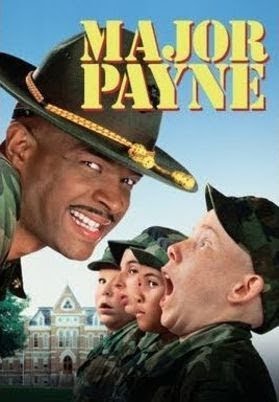
Major Danger
Friday, October 2, 2015
The Tango Wench & her Pirate
![]() |
| The Tango Pirate needs a Wench |
Tradition of a mistranslation
I am sure that some would find "beauty and deep meaning" if the terms "pirate" and "wench" had these terms been the English words we had chosen for Argentine Tango roles. But instead the English-speaking tango community has settled on the traditional ballroom terms, "leader" and "follower," which are perhaps equally inappropriate terms as much as "pirate" and "wench." "Leader and follower" are appropriate for ballroom, but they just are detrimental for improvisational, magical nature of Argentine tango.
Saturday, September 19, 2015
Ambassadors of Peace on the Dance Floor
![]() |
From the most humble person in a nation to the president: We are all ambassadors. That is why I prefer the name "embajadora" for the person in the Rol Femenino in tango. "Followers" have a limited part in real power, but the Rol Femenino is a powerhouse of talent and gives equilibrium to the tandem, improvisational dance of tango.
And we need ambassadors! How is peace maintained on the wild "streets" of the dance floor: People embracing each other, hypnotized by the music AND moving forward while making circles, stops and turns!
Ambassadors keep us from road rage and mortal combat!
Saturday, August 22, 2015
Music, Dance and the Survival of the Fittest
The thinking animal needs music and dance to survive.
Darwin hushed the music. He thought, at first, that music and dance were not important for the survival of our species. Evidently, he wanted to think about music rather than listen and feel.
Perhaps, unlike the Greek poets, Darwin did not want the Muses to distract him or, God forbid, get the him, as a clergyman, to move to the music! He was ignoring some important data. Music has preoccupied the poor, the rich, and nearly all great thinkers throughout human history. What was Darwin missing?
Tuesday, August 11, 2015
Tango Chorophobia?
Most of us start out as children with no fear of dancing--that is, with no "chorophobia." Psychological blocks sometimes come later and we don't even recognise them as fears.The word "phobos" from ancient Greek means to avoid or withdraw, which is perhaps a better behavioral way of understanding phobias. It is all too easy to avoid or withdraw from dance either before learning the skill or after having bad experiences while dancing. The good news is there are effective ways to "treat" chorophobia. I will address solutions at the conclusion of this post.
Sunday, July 12, 2015
The Five Languages of Tango
The wise tango dancer is fluent in five languages
Do you know your two primary "tango-love languages"? Gary Chapman's book, "The Five Love Languages" has been on the New York Times Best Seller List since 2009. Many people feel that his concepts have helped them to understand their partner's needs and feel that they are better understood by their partner too.
Tango gives you a chance to be far more perceptive about these languages than the average person.
I suggest you think about his categories from the perspective of being a more psychologically aware tango dancer. The first place to start is self-awareness. Consider the above five categories shown in the illustration above. What do you think are your two dominant languages from those that are listed above? Check your self-perception by taking the test and then, read on.
Thursday, July 2, 2015
T for Tango Addict
Are you a tango addict? A tango sinner? Do you shamefully bear the "T" upon your forehead?
I hope that that one day all the references about being a tango addict will be seen as worn out joke. I know it's easy to talk in terms of getting a "fix" with anything that is pleasurable, but it's time to give it a rest, especially for tango.
I have a therapist friend, who says in all seriousness that I am a tango "addict." He grew up in a church that banned all dancing because it was a sin. He presently spends far more time in front of a television than I do dancing. His boob-tube time, just as my time dance, is not destroying our lives or giving us hangovers. His TV and my tango are activities that are not ruining our social lives. We continue to be able to perform at work. Is his "clinically informed" diagnosis that I am a tango addict a product of scientific analysis? I think it is more likely that his reasoning is clouded by his earlier belief that dance was a sin. Sin/addiction. One coin, two sides. In countries like Cuba, where dancing as a culture is seen as healthy, you won't hear "sin/addiction" language about dance.
I hope that that one day all the references about being a tango addict will be seen as worn out joke. I know it's easy to talk in terms of getting a "fix" with anything that is pleasurable, but it's time to give it a rest, especially for tango.
I have a therapist friend, who says in all seriousness that I am a tango "addict." He grew up in a church that banned all dancing because it was a sin. He presently spends far more time in front of a television than I do dancing. His boob-tube time, just as my time dance, is not destroying our lives or giving us hangovers. His TV and my tango are activities that are not ruining our social lives. We continue to be able to perform at work. Is his "clinically informed" diagnosis that I am a tango addict a product of scientific analysis? I think it is more likely that his reasoning is clouded by his earlier belief that dance was a sin. Sin/addiction. One coin, two sides. In countries like Cuba, where dancing as a culture is seen as healthy, you won't hear "sin/addiction" language about dance.
Sunday, June 28, 2015
When she mistakenly thinks I am Zorro
I cannot be Zorro, my favorite TV character as a child. I am too white . . .
. . . but sometimes I get away with it in a dimly lighted milonga. I am more like the Lone Ranger, that is, if I want to indulge myself with delusions of grandeur.
Earlier I wrote about the idea of valuing partners and how it will add to one's enjoyment in my last post, Tango and the Path of Pleasure. The concept on a psychological level was that one can be tricked into valuing others or one can choose to value others as a chosen psychological Path of Pleasure. The quest of going down a more psychologically mature path of kindness and spiritual curiosity is obviously a way that assures a much more sustainable enjoyment of tango, or any type of pleasure, through one's life. Along these lines of "valuation," let me give a few more examples:
. . . but sometimes I get away with it in a dimly lighted milonga. I am more like the Lone Ranger, that is, if I want to indulge myself with delusions of grandeur.
Earlier I wrote about the idea of valuing partners and how it will add to one's enjoyment in my last post, Tango and the Path of Pleasure. The concept on a psychological level was that one can be tricked into valuing others or one can choose to value others as a chosen psychological Path of Pleasure. The quest of going down a more psychologically mature path of kindness and spiritual curiosity is obviously a way that assures a much more sustainable enjoyment of tango, or any type of pleasure, through one's life. Along these lines of "valuation," let me give a few more examples:
Monday, June 8, 2015
Tango and the Path of Pleasure
Something occurred to me as I was reading some studies about the brain's response to the price of wine--or at least the perception of the price of wine. Whether it is tango or the taste of wine when we value the object of our desires, the pleasure goes up. But what happens when we truly value others. Doesn't it make sense that our pleasure in life will go up?
At the bottom of this post, I will introduce you to some remarkable results from a few psychological studies on the relationship to valuing wine to enjoying wine. Yet, all of them are missing a much larger spiritual lesson. The bottom line of these studies, which may not surprise you, is that when people believe that a particular wine is expensive, then the pleasure of drinking that wine increases too. But what does it all mean in application? Put $200 price tags on the wine you serve so your guests can have more pleasure?!
Sunday, May 31, 2015
Blocks from Dancing Freely
![]() |
| Dancers breaking the prohibition of dance at the US Capital's Monuments |
Blocks.
Psychological obstacles, legal consequences and in nearly every country, religious beliefs.
The American Constitution's First Amendment provides for Freedom of Speech but not dance. When it comes to human development, the order of freedoms should follow our human development:
Freedom of Dance comes first as babies.
Freedom of Speech comes next and then much later . . .
Freedom of Religion (or personal philosophy).
Sunday, May 24, 2015
No one can teach you to dance
No one can teach you what you already know. Others can help you develop and uncover and nurture what you already know, but I believe that this is different than "teaching." Teachers do both: Teach and uncover. The best teachers know where uncovering starts and ends. They look for "talent" (latent abilities) rather than mostly focusing on every little error that a person may make.
So it is with dance. If "dancing" means "to respond bodily to music." No one can teach you to dance because you already were born with that hardwired to your humanity. The same is true of being the speaking animal. No one has truly "taught" you to speak--to communicate your feeling and desires. You were born to dance and speak as a human animal. It is too late to teach children to speak or dance at grammar school. They already can without the "benefit" of education. Those who are the best teacher-guides know (or at least intuit) that their role is to co-discover (the external world) and co-uncover (the internal world) of these primary human talents of dance and speech.
Wednesday, May 13, 2015
What I learned from a ballet teacher
Jenny has a remarkable business--a type of missionary business--dedicated to dance. Most of her staff members are volunteers, and I wanted to be part of the good that she is doing. The mostly volunteer staff is all talented dancers, and have it in their blood to dance. Jenny asked me to help with the theme "tango" at her studio's second anniversary in a small city in Germany, where I was living recently.
I shocked poor Jenny with the suggestion that she should be my partner to perform this tango demonstration in front of all her students, their parents and her staff.
Wednesday, April 22, 2015
The Tango Attitude IQ Test
In the field of mental health, a new way of thinking about "intelligence" has emerged to be more accepted: Emotional Intelligence. A subtype of Emotional Intelligence is Attitudinal Intelligence. Attitude can be also defined "as the line of travel a plane takes as it comes in for a landing." If the attitude is too steep, you crash. Attitude is everything when it comes to flying a plane and dancing tango.
Saturday, March 21, 2015
How to hone down a "square-pegged" body
Your body was born to dance. Our bodies are sometimes like square-pegs, not fitting into the roundness of the music. But if we let the music in, the music can transform us. This transformation is the natural bodily response. It rounds us, hones us down. Dance-like movements (called steps) are often merely square holes, which also can be rounded by the power of music.
Monday, February 16, 2015
Tango lyrics: Dangers in not knowing a few songs
![]() |
| Cupid cries over a bag of gold; a man pines over his tragic loss. |
...also in German
Perhaps there is some beauty in just listening to the music when you don't speak Spanish. But I am sure that you will be convinced by this post that knowing the lyrics of at least a few tangos can be very important, especially the lyrics for a song you might want to perform or use for a special occasion, such as a wedding.
Biagi's interpretation of "La Marcha Nupcial" (the Wedding March) is an excellent example! I know. I just was married, and the majority of guests were from the tango community. Sure, it was tempting to play "La Marcha Nupcial" at our milonga/reception after exiting a wedding palace in Strasbourg, France. However, this tango's lyrics would have created an ironic backdrop--once you know the meaning of the words (given in English below).
Thursday, January 22, 2015
He will always dance better than I . . .
I cannot compete with the best dancer.
He embodies the music better than I,
His embrace fits more nicely to my partner.
His movements are excitingly new,
And hewn from years of experience.
But can his dancing truly compete with me?
My soul and hers dance to the music of love.
My lover snuggles in bed with a novelist,
His body is a book and he enthralls her with his tale.
But can his stories compete with mine?
My story is now ours, a novel with dual authorship.
My Lover melts when she hears
The singer’s melody, touching her breast.
His voice helped her through months of tears.
But can he compete with my song, my lullaby?
She stands in awe of great artists in history.
Their paintings cast a long shadow over mine.
But can they compete with our self-portrait,
An animated canvas brushed by love each day together?
Writers, poets, musicians, artists. . . and dancers–
They all add to our love of the world around us.
Enjoyment of those outside of ourselves makes us whole.
Our love lets go of having to be the best, the one and only.
She is free to be herself, and to love creativity around her.
Our art is the freedom from jealousy, a tandem dance of love.
Note on the "singer's voice": Miguel di Genova of "Otras Aires" sang to my fiancée while driving home from a very sad time in her life. Why would I be jealous of the great artists and friends in my her life? Tango couples have difficulties because of holding on to the hope that they are the "one and only." There is never a "one and only." There is a whole universe of people who bring richness to us, and of course, to our partners. Let go, and let it be so!
The original poem appeared on London's Tango Folly and also has been wonderfully translated by Clara M into German at www.tango-therapeut.blogspot.de. I was totally amazed at the "poetic license" she used as a translator, and she may have made the poem better than the original.
Photo Credit
Friday, January 9, 2015
Is your Milonga on Mars or Venus?
![]() |
| Tangueros are not from Mars, nor tangueras from Venus. Both are from Earth. |
Earth is a great middle-point meeting place for Martian and Venusian dancers to visit a milonga. The Morning Star and the Red Planet send representatives to meet here at milongas, and it is really pretty cool. I have been an astute observer of the differences of "Venusians" since I was a small child, and yes, these differences seem to bring the warmer Venusian climate to my cool Martian body temperature. I have to admit, in all honesty however, that the more I know about neurological research and cross-cultural research, I have learned that men and women are remarkably similar.
For dancers the most important myth of differences is that women have more talent and respond to music better. If you are from Latin America, you will have a hard time understanding what I am talking about. In your culture men do not need to repress their masculine expression of dance. So at least when it comes to dance, I am mostly speaking to much of America and Europe, where the Venus/Martian Myth is obvious as ... as the flat Earth: That is, very obvious for the untrained observer.
Subscribe to:
Posts (Atom)